
(photo credit: Microsoft Stock Images)
Self-employment can give parents greater control over their schedules and careers, but it also changes how a family manages money. There may be no predictable paycheck, employer retirement match, paid leave, or workplace benefits package. A strong financial plan accounts for that variability before a slow month or unexpected expense puts pressure on the family budget.
Build Your Budget Around a Lower Baseline
A salaried household can usually plan around a known monthly income. Self-employed families often need a different approach. Review the previous 12 to 24 months of business income and identify what a relatively low-earning month looks like. Building essential household expenses around a conservative income figure can prevent strong months from creating spending habits that become difficult to maintain later.
Separate fixed costs from flexible spending. Mortgage or rent, utilities, groceries, insurance, and minimum debt payments belong in the first category. Travel, entertainment, and discretionary purchases can adjust when business income falls. When a stronger month arrives, the extra money already has a job instead of disappearing into higher spending.
Keep Business and Household Money Separate
Mixing business revenue with personal spending makes it difficult to tell how much the business is actually earning. Separate bank accounts can create a cleaner record of revenue and business expenses. Rather than treating every client payment as household income, self-employed parents can establish a regular transfer from the business to their personal account.
Taxes also deserve their own system. Self-employed workers may need to make estimated tax payments during the year. Setting aside a percentage of income as payments arrive can prevent a tax deadline from becoming a household financial emergency.
Create More Than One Emergency Fund
Self-employed families face two kinds of financial disruption: personal emergencies and business problems. A household emergency fund can cover expenses after an unexpected medical bill, home repair, or temporary loss of income. The business may need its own reserve for equipment failure, a late-paying client, software costs, or an unusually slow period.
Keeping those reserves separate makes their purpose clear. Using the family’s emergency savings every time the business has a weak month can gradually remove the protection the household depends on.
Replace Benefits an Employer Would Normally Provide
Working independently means building a benefits package yourself. Health coverage is usually one of the largest considerations, but financial protection should extend further.
Disability insurance can be especially relevant because the ability to work often generates most of a self-employed parent’s income. Retirement savings also require deliberate planning without automatic workplace enrollment or an employer match.
Life insurance may belong in the same conversation, particularly when children or a spouse depend on the self-employed person’s earnings. Families comparing life insurance quotes should consider the income that would need replacing and other long-term financial responsibilities.
Plan for Irregular Expenses Before They Arrive
Some bills are predictable even though they are not monthly. Vehicle registration, annual insurance premiums, holiday spending, school expenses, professional licenses, and equipment replacement can easily disrupt a monthly budget.
Creating small sinking funds for these expenses spreads the cost across the year. A $1,200 annual expense, for example, becomes a $100 monthly savings target rather than a sudden four-figure bill.
The same strategy can help with unpaid time off. Self-employed parents who want a family vacation can save for both the trip and the income they may lose while away from work.
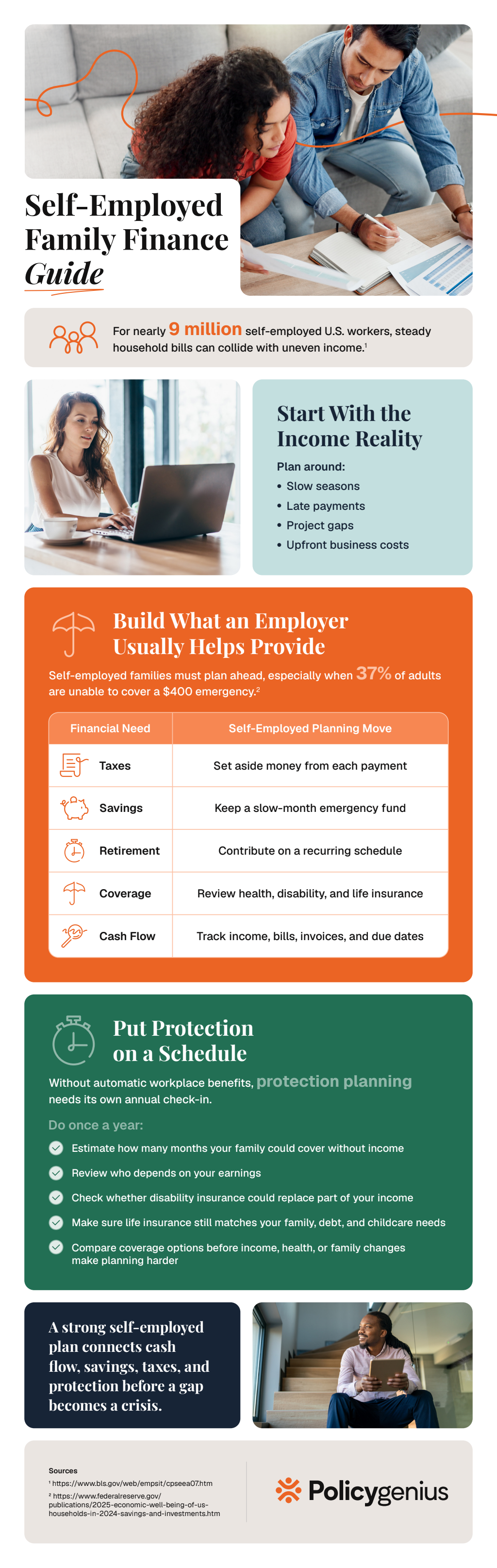
Self-employment shifts more financial responsibility directly onto the household, but irregular income does not have to mean financial disorder. Conservative budgeting, separate accounts, cash reserves, planned taxes, and preparation for irregular expenses can make income fluctuations easier to absorb. Look over the infographic below to learn more.