
(photo credit: Microsoft Stock Images)
Teenagers are expected to manage schoolwork, friendships, extracurricular activities, family responsibilities, and decisions about their futures, often while getting less rest than they need. A busy schedule alone does not equal burnout. The problem develops when prolonged stress leaves a teen feeling exhausted, detached, and increasingly unable to meet demands that once felt manageable. Parents who recognize that shift can respond before stress begins affecting several areas of life.
What Pushes Teens Toward Burnout?
Academic pressure is an obvious source. A teenager may spend the school day in demanding classes, attend practice afterward, complete homework at night, and still feel pressure to build an impressive college application.
The expectations do not always come directly from adults. Teens compare grades, athletic performance, social lives, and college plans with their peers. Social media can extend that comparison well beyond school hours.
Overcommitment adds another layer. Sports, clubs, jobs, volunteering, and advanced courses can all be worthwhile individually. Together, they can leave little unscheduled time for sleep or recovery.
The school environment can influence these pressures as well. Families comparing public programs, homeschooling, or private schools should look beyond academic offerings and consider workload, extracurricular expectations, student support, and the amount of time a teenager realistically has outside school.
Burnout Can Look Like More Than Tiredness
Fatigue is common during adolescence, so parents should look for changes rather than a single symptom. A previously motivated student might begin procrastinating, missing assignments, or expressing indifference about grades. Another teen may become unusually irritable, withdraw from friends, or stop enjoying an activity that once mattered deeply.
Physical complaints can appear too. Stress may accompany headaches, stomach problems, muscle tension, appetite changes, or difficulty sleeping. A teenager can therefore be exhausted while still struggling to fall asleep at night. One poor week is different from a pattern that continues and starts interfering with daily life.
Rest Is Part of Performance
The instinctive response to falling grades may be to add tutoring, study hours, or stricter schedules. If exhaustion is driving the problem, adding more demands can make matters worse.
Parents can start by looking at the entire week. How much time is committed before homework begins? Is the teen regularly sacrificing sleep to finish assignments? Are weekends filled with competitions, work shifts, lessons, and social obligations? Something may need to come off the calendar.
Sleep deserves particular attention. The American Academy of Sleep Medicine recommends that teenagers ages 13 to 18 regularly get 8 to 10 hours of sleep per 24 hours. Consistently cutting that time short to create additional study hours is a poor trade if concentration and alertness suffer the next day.
Long-Term Stress Can Reach Beyond School
Burnout should not be dismissed as a temporary academic problem. Chronic stress can affect sleep, mood, relationships, and healthy routines. A teen who begins skipping meals, abandoning exercise, withdrawing socially, or relying heavily on caffeine to keep functioning may carry those patterns beyond a demanding semester.
There is also a difference between burnout and a mental health condition, although symptoms can overlap. Persistent sadness, severe anxiety, major behavioral changes, or loss of interest in most activities deserve attention from a qualified healthcare professional. Any talk of self-harm or suicide requires immediate help.
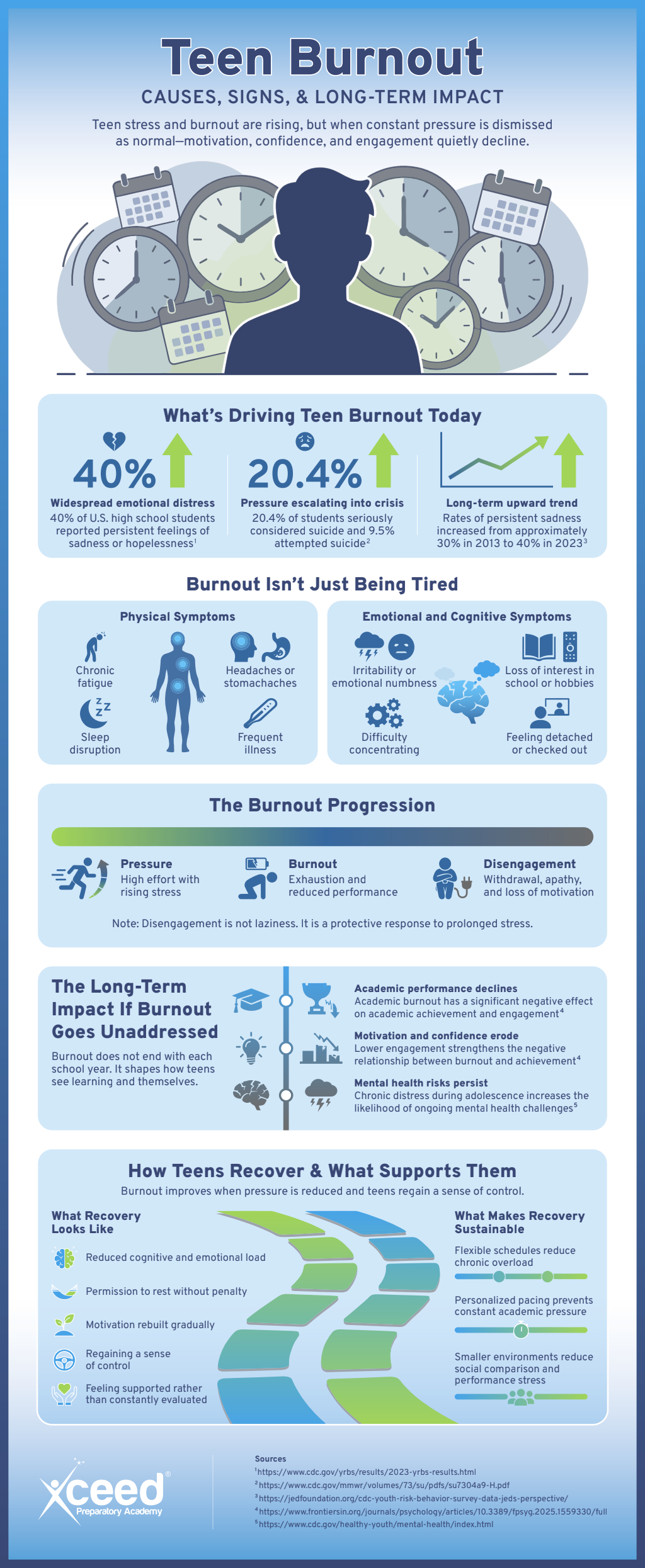
Parents do not need to eliminate every stressful experience from adolescence. Learning to handle deadlines, disappointment, and demanding goals is part of growing up. The more useful goal is helping teens recognize when sustained pressure has exceeded their ability to recover. A realistic schedule, adequate sleep, open conversations, and permission to reconsider commitments can protect a teenager’s ability to enjoy life. Check out the infographic below for more information.