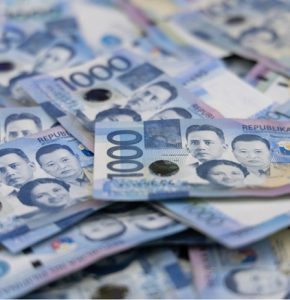
There are some questions about money that seem simple until you actually sit down and think about them.
How much should I have in savings by now?
Sometimes you hear someone say they already have six months of expenses saved, and suddenly you start wondering if you’re behind. Then you see another person talking about investments, retirement funds, college savings, and emergency funds — and you’re just sitting there thinking, Wait… am I supposed to have all of these already? 😅

I’ve had those moments too.
As a mom, I’ve learned that saving money isn’t really about reaching one magical number. Our financial priorities change as our family changes. There are years when we’re able to save more and years when unexpected expenses seem to eat up everything we put aside.
With kids growing up, everyday expenses, family trips, birthdays, school expenses, and all the little surprises that come with running a household, I’ve realized that having savings is less about being perfect and more about creating breathing room.
So if you’re wondering how much money you should have in savings at different stages of life, here’s a practical way to look at it.
Your 20s: Start With Your First Financial Cushion
If you’re in your 20s, don’t feel pressured to have a huge amount of money saved immediately.
Your first goal can simply be to build the habit.
Start with your first ₱10,000, then work toward one month of essential expenses. Once you have that, you can gradually build toward three months of expenses.
This is also a good time to start separating your savings into different purposes. Even if the amounts are small, having an emergency fund, regular savings, and long-term savings makes your money easier to manage.
The important thing is to start.
Your 30s: Build a Stronger Safety Net
Your 30s can be an expensive decade.
You might be getting married, buying a home, raising children, paying for childcare, helping parents, or dealing with a growing list of household expenses.
This is when having three to six months of essential expenses saved becomes particularly valuable.
For example, if your family needs ₱50,000 a month for basic expenses, a six-month emergency fund would be ₱300,000.
That’s a big number—but you don’t have to save it overnight.
This is something I’ve learned as a mom: sometimes financial goals look overwhelming when you look at the final number instead of the next ₱1,000.
Your 40s: Don’t Forget About Your Future
By your 40s, you’re probably thinking about more than just emergencies.
You’re also thinking about your children’s future, retirement, your parents, home expenses, and the kind of life you want later on.
This is the stage where I think it’s especially important to stop treating all savings as one big pot of money.
Your emergency fund is for emergencies.
Your children’s education fund is for education.
Your retirement savings are for your future.
And your travel fund? Well, that’s for the family memories you’re going to make along the way. 😂
When Ykaie was younger, I thought about college as something that was still so far away. Now she’s already in college at UP Diliman, and it makes you realize just how quickly these financial goals arrive.
That’s one reason I believe saving should happen alongside everyday life—not only when we feel like we have “extra” money.
Your 50s and Beyond: Protect What You’ve Built
By your 50s, the focus may gradually shift from simply accumulating savings to protecting your financial security.
You may want a larger emergency fund, especially if your income is becoming less predictable or you’re approaching retirement.
This is also a good time to review your insurance, debts, retirement savings, investments, and major future expenses.
The goal isn’t necessarily to have a certain amount sitting in a bank account.
It’s to know that if something unexpected happens, you have options.
So, How Much Should You Actually Have?
Instead of obsessing over a specific savings number based on your age, I prefer using milestones:
First goal: ₱10,000 emergency cushion
Next goal: One month of essential expenses
Next: Three months of essential expenses
Long-term emergency fund: Three to six months of essential expenses
Beyond that: Build separate savings for retirement, education, major purchases, and family goals.
And remember that your ideal amount will depend on your income, household size, job stability, debt, lifestyle, and responsibilities.
A single person with stable employment will have different needs from a family with children and multiple financial obligations.
Don’t Compare Your Savings to Someone Else’s
This might actually be the most important part.
You don’t know someone’s entire financial picture just because they post about having ₱500,000 in savings.
Maybe they have debt. Maybe they have no dependents. Maybe they inherited money. Maybe they’ve been saving for ten years.
And maybe you’re currently paying for school, groceries, household expenses, and everything else that comes with raising a family.
Your financial journey is your own.
There have been seasons in our family when saving felt easy and seasons when it felt like every peso already had a job before it even arrived.
What matters is that we keep trying to create that little bit of financial breathing room.
Because I’ve learned that ₱1,000 saved is still better than ₱0 saved.
And ₱10,000 is a start. ₱50,000 is progress. ₱100,000 is progress.
Whatever number you’re working toward, don’t let the fact that you’re not there yet stop you from starting.
After all, we’re not just saving money. We’re buying ourselves a little more peace of mind.
And as a mom, peace of mind is one of the best things money can buy. ❤️